Web Search APIs for RAG Grounding and Citation Attribution in AI Agents
Web search APIs are crucial infrastructure for keeping AI agents grounded in current reality.
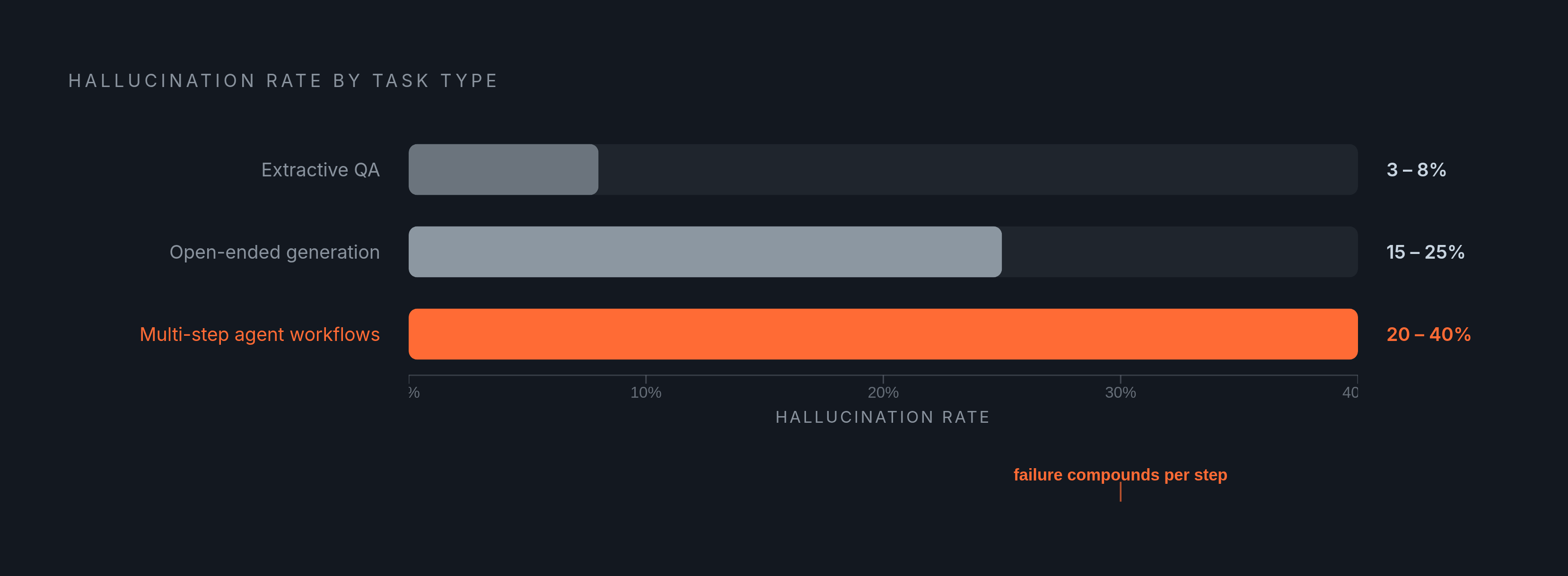
Web search APIs have quietly become the infrastructure layer that decides whether an AI agent's answer is trustworthy or just fluent nonsense with footnotes. That distinction sounds abstract until the numbers get put on the table. That last number should give anyone building agentic pipelines pause, since it means the failure rate compounds with every additional step the agent takes on its own. Web Search APIs for RAG Grounding and Citation Attribution in AI Agents
This isn't a theoretical concern confined to benchmark papers. Arthur AI's data puts a dollar figure on it: 34% of enterprises reported a customer-facing incident tied to an LLM hallucination within the past year, and in regulated industries the average cost of cleaning up after one exceeded $50,000. Even setting aside worst-case incidents, the ceiling on raw model reliability is lower than most people assume. On the AA-Omniscience benchmark, the best frontier models available as of June 2026 scored around 40 out of 100 on knowledge reliability. Forty. Not a failing student's score exactly, but not something anyone would want steering a compliance workflow unsupervised either.
Why does this happen? Models are trained on a fixed snapshot of the world, and the world does not hold still. News breaks, prices move, regulations get amended, and a model frozen at some training cutoff has no way to know any of it happened. Grounding exists to solve exactly this mismatch, tying a model's output to sources fetched at the moment of the question rather than baked into its weights months or years earlier.
Grounding works when it's layered properly. A 2026 meta-analysis of twelve production deployments found that stacking system prompts, RAG grounding, and real-time monitoring together cut hallucination rates by 71 to 89% compared to ungrounded deployments. That's a substantial improvement. It's the difference between a system nobody should trust with a customer-facing task and one that starts to look production-ready. But the operative word is "layered": grounding alone, bolted onto an otherwise unguarded system, does not get you there. The rest of this piece is about what the layering actually looks like at the infrastructure level, and why the choice of search API sits at the center of it. Hallucination rates vary sharply by task shape, with extractive QA systems hallucinating on 3–8% of responses, open-ended generation on 15–25%, and multi-step agent workflows on 20–40% of tool-call chains, according to Deepchecks LLM Evaluation Benchmarks 7 Best Web Search APIs for Grounding LLMs in 2026 - Confident AI.
What a grounding API is, and how it differs from generic RAG or raw web search
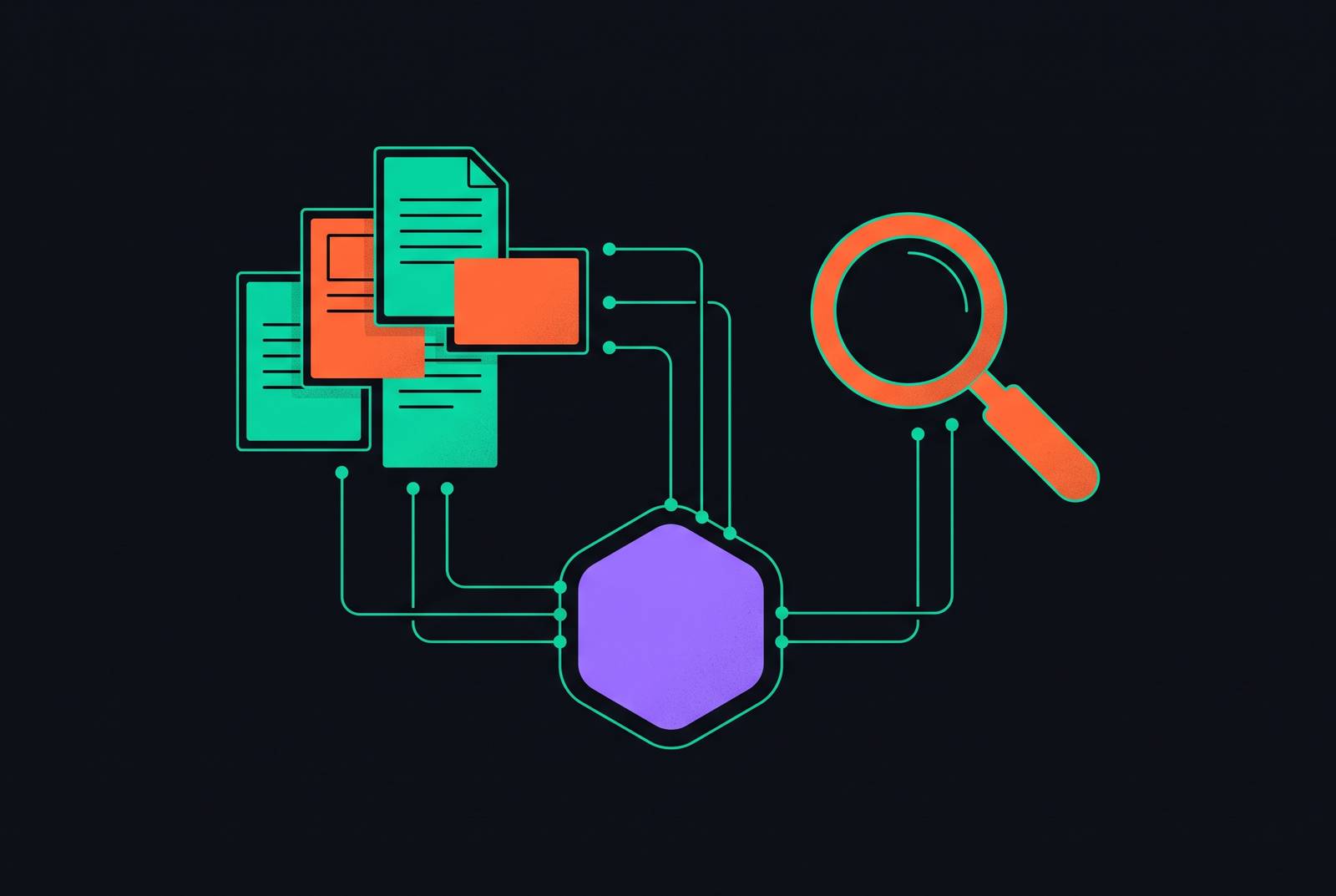
When the marketing is stripped away, a grounding API is a fairly simple mechanism: it sits between an agent and the open web, or a private index, and returns evidence the model can cite in real time. Not links for a human to click through later. Machine-readable, source-attributed content the model can reason over directly, in the same turn it's generating an answer. "Grounding" only crystallized as its own category name in 2026, when Google extended grounding with Google Search across the Gemini API and Gemini Enterprise Agent Platform. Before that, the pieces existed, but nobody had drawn a clean box around them.
Generic RAG retrieves from a static, pre-indexed corpus the team built, excellent for internal docs, tickets, and contracts, but it knows nothing about what changed on the web this morning. Raw web search returns ranked links and snippets designed for a human's eyeballs. The agent still has to fetch each page, strip out navigation and ads, dedupe overlapping results, and reconcile pages that contradict each other. All of that latency, and all of that failure surface, lands on the team building the agent. A grounding API is different in kind, not just degree: it returns live web evidence that's already deduplicated, source-attributed, and dense, structured for a model to consume rather than a person to skim. The corpus is the live web itself, and the output arrives already shaped for machine reasoning.
So which one should a team actually reach for? Linkup's practical framing cuts through most of the confusion: use RAG for what a company already owns, and use a grounding API for what the world publishes and keeps changing. Most production agents, in practice, need both layers running side by side, not one instead of the other.
How much is riding on the choice of search API specifically. It isn't just a discovery mechanism bolted onto the front of a pipeline. A 2025 survey of agentic deep research systems found that standard LLMs relying on basic keyword search scored below 10% on complex multi-hop research benchmarks, while systems built around iterative retrieval, meaning search, reason, search again, scored dramatically higher. That gap alone should settle any argument about whether the retrieval architecture matters as much as the model sitting on top of it.
The rest of this piece tests providers against four axes, borrowed from Linkup's framing: freshness, evidence density, source diversity, and how LLM-ready the output actually is. The three-way distinction. The search API controls more than discovery, affecting source recall, freshness, full-page extraction, support for JavaScript and documents, citation provenance, latency, token usage, and how much retrieval infrastructure a team must maintain, according to Confident AI.
The two-tier market: SERP wrappers versus AI-native search APIs
The web search API market splits cleanly into two tiers, and confusing them is one of the more common mistakes teams make when architecting a retrieval pipeline. Tier one, the SERP APIs, wrap Google or Bing and hand back metadata: titles, snippets, URLs. They're genuinely useful for rank tracking and traditional search applications, but for an agent, a SERP API hands over a pointer to the content, not the content itself⟧c16⟦. Someone, or something, still has to go fetch the page.
Tier two, the AI-native search APIs, return full page content or synthesized, grounded answers, already cleaned and structured for an LLM to reason over. That difference matters more than it sounds like it should on paper. A SERP wrapper was never built with an autonomous agent in mind. It was built for a search results page.
What does "matters in production" actually cash out to? A handful of concrete dimensions are the ones that recur in the benchmark data later in this piece. Source recall and freshness, meaning whether the API actually finds recent material and how much of the relevant web it covers. Full-page extraction rather than truncated snippets. Support for JavaScript-rendered pages and documents. Citation provenance and URL attribution, so a claim in the output can be traced back to where it came from. And finally, latency and token budget, along with the blunt operational question of how much retrieval infrastructure a team has to build and babysit themselves.
None of this is meant to rank tier two providers against each other yet, that comes later. The point of drawing this line is to give readers a framework sturdy enough to evaluate any option that appears next year, not just the ones benchmarked this year. Agents need grounded data, structured output, specialized datasources, citation trails, and budget controls, none of which are first-class in a generic web search API, according to Vellum.
The citation problem that grounding alone does not solve
Here's an uncomfortable finding: in one study, up to 57% of evaluated citations showed what researchers call post-rationalization, where the citation was present in the output but wasn't actually how the model arrived at its answer 7 Best Web Search APIs for Grounding LLMs in 2026 - Confident AI. Over half. That's not a rounding error in an otherwise solid system; it is a coin flip on whether a citation reflects genuine reasoning or a plausible-looking source stitched on after the fact.
What does post-rationalization actually look like from the outside? The agent surfaces a source that appears to support its claim, formatted exactly like a faithful citation, indistinguishable in the output from one that actually drove the answer. But it didn't drive the answer. The model answered first, probably from something closer to its training weights than the retrieved evidence, and then went looking for a source that seemed to fit. Structurally, that's unfaithful. Visually, on the page, it's invisible.
Why does this persist even in systems that are, technically, grounded? Because there's a tension built into the design of any citation system that no architecture fully resolves. A curated corpus lets a service trust its sources completely, but it can't possibly cover every question a user might ask. Open web search can find something for nearly any question, but it inherits the open web's uneven quality along with it, sketchy blogs sitting next to peer-reviewed sources with no inherent signal distinguishing the two. Neither approach eliminates the underlying problem. They just trade one failure mode for a different one.
Google's Check Grounding API is worth studying closely here, because it's one of the more explicit attempts at scoring citations rather than just producing them. It returns a support score between 0 and 1 that measures how grounded a given answer candidate is in the supplied set of facts. It exposes a citation threshold, also a float from 0 to 1, where a higher threshold produces fewer citations but stronger ones. And rather than scoring an entire response as a single unit, it scores support claim by claim, sentence by sentence, recognizing that a throwaway line like "here is what I found" doesn't need grounding the way a factual assertion does. Google's own guidance for teams building on this is granular almost to the point of being fussy: break large facts into smaller, attribute-tagged pieces, title, author, URL, rather than feeding the system one undifferentiated block of text, because the smaller structured pieces score more reliably.
There is some genuine good news buried in the more recent literature. Fabricated and miscited references are trending downward as leading models and answer engines get better at attribution generally. But "trending downward" is not the same as "solved," and the research is explicit that the problem remains imperfect. For teams actually building these systems, the implication is that citation quality can't be treated as a checkbox or a feature flag flipped on once. It requires real architectural decisions, how the search API structures its output in the first place, and how the pipeline downstream validates that output against the actual source material rather than trusting the citation at face value. The API is designed to run at less than 500ms latency so it can fire on every inference turn.
What the current benchmarks show about accuracy, speed, and cost across providers
No single provider wins across every benchmark, and that is the actual shape of the data. Readers hoping for one clean leaderboard will end up disappointed, and honestly, should probably be suspicious of any piece that hands them one.
Start with the Openbenchmarks three-task framework, last measured on September 26, 2026, across 300 factual lookups, 100 hard retrieval questions, and 45 deep research questions. On raw factual lookup, one provider's fast mode hit 99.3% accuracy across all 300 questions. On the harder retrieval set, that same provider's deep mode reached 83.0%. But on multi-hop, agentic search, the kind of task where the system has to chain several retrievals together, a different provider's basic tier led at 46.5% F1, a sharply lower number that says something important: multi-hop reasoning is simply a harder problem than single-shot factual lookup, and accuracy on one task shape tells almost nothing about performance on another. The providers tested were Perplexity and Linkup, among others.
Speed and cost tell a similarly fractured story. Lay these side by side and paying more roughly buys either speed or accuracy, rarely both at once, and the cheapest option is never the most accurate one. BrowseComp accuracy ranged from 66% to 74% with a frontier agent and from 32% to 46% with a low-cost agent. The Linkup enterprise complex query benchmark used a 600-query dataset, comprising 150 queries from real user traffic and 450 synthetically generated, covering business intelligence, regulatory compliance, and multi-entity research.
Multi-hop agentic accuracy is where the spread gets genuinely wide. Parallel AI's BrowseComp test, run in July 2026 across six APIs, found agentic accuracy ranging from roughly 19% up to 58%, with one provider scoring 51% and another at just 19.3%, the lowest mark in the entire table. More strikingly, cost variance outran accuracy variance entirely: low-cost tier spend on BrowseComp ranged from $11.80 to $176 per 1,000 questions. No engine led on every axis; one provider tied another on BrowseComp but at meaningfully higher cost, while a third edged ahead only at the low-cost tier, and yet another beat the field specifically on WideSearch. In the developer questions sub-benchmark of September 2026, covering 100 questions, Perplexity leads by accuracy at 77.3%, Parallel turbo is fastest at 333ms average, and TinyFish is cheapest at $0.035 median task cost including LLM and search API spend. The September 2026 five-API comparison covered BrowseComp, SimpleQA Verified, and WideSearch.
An independent Confident AI benchmark running eight APIs against 100 AI-oriented queries and roughly four thousand retrieved results found that several providers fell within the same top statistical tier, a reminder that a single leaderboard position often overstates a gap that isn't statistically distinct. In the RAG sub-benchmark from Openbenchmarks, Perplexity leads RAG tasks at 77.3% completion.
Enterprise-grade queries show a different fault line entirely. The gaps widened specifically on multi-hop and multi-entity queries, exactly the task shape that seems to break most systems across every benchmark cited here Linkup Enterprise Complex Query Benchmark.
Freshness deserves its own callout, because it's the axis most directly tied to why grounding exists in the first place. On a 600-query time-sensitive benchmark, one provider hit 79% accuracy against a general search engine's 39% and another provider's 24%, the largest freshness gap found anywhere in this data. On finance-specific questions from the same study, Valyu scored 73% against 55% for Google.
When the discussion is pulled back, the honest takeaway is this: the right question was never "which API is best," it's "which API is best for this task shape, this latency budget, and this cost envelope". A system optimized for sub-second factual lookups is not the system anyone should reach for on a multi-entity compliance research task, and the benchmarks above make that plain enough. Speed vs. Accuracy breakdown, per Openbenchmarks, on the same 300 questions. Parallel turbo was fastest overall at 348ms average, with 71.3% accuracy and $1.00 per 1,000 queries.
Provider profiles: what each option is built to do
Given how fractured the benchmark data is, it makes more sense to describe what each provider is actually built for than to force a single ranking onto systems designed with different priorities.
One production-oriented option returns full-page content, not just snippets, in clean markdown or structured JSON, with JavaScript rendering, anti-bot handling, and proxy management built directly into the pipeline. It ships an agent endpoint that handles multi-step research tasks in parallel, which suits agentic RAG pipelines specifically. Pricing starts with 1,000 free credits monthly and paid plans from $19 a month.
That's a meaningfully different design philosophy: rather than handing an agent raw evidence to reason over, it does the reasoning itself and hands back a finished, cited answer. It returns a synthesized answer with inline citations in a single call, requiring no retrieval loop, parsing, or separate LLM synthesis.
It's worth evaluating this on the same four axes, freshness, evidence density, source diversity, and how LLM-ready the output actually is, that the rest of this piece has used throughout. BrowseComp accuracy for one provider was 19.3%, the lowest among six tested, per Parallel AI. Perplexity Sonar API.
The wider lesson across every provider profiled here, and every benchmark cited above, is the same one this piece opened with: grounding is an architecture built from many decisions, not a single feature that gets switched on. It is an architecture made up of dozens of small decisions about freshness, evidence density, citation structure, and cost, and the search API beneath an agent is where most of those decisions get made. It achieved 95.3% accuracy at 510ms average per Openbenchmarks, and was ranked first for end-to-end grounding by Confident AI in July 2026. It was ranked first overall by Confident AI for production agents that need search, extraction, documents, and web interaction in one context layer.
Sources
- 7 Best Web Search APIs for Grounding LLMs in 2026 - Confident AI
- Best Web Search APIs & MCPs for AI Agents 2026 - Vellum
- Check grounding with RAG | Agent Search | Google Cloud Documentation
- Linkup - What Is a Grounding API for AI Agents?
- Curated retrieval versus open web search in public AI information services: a coverage-trust trade-off
- Linkup - Web Search API Comparison 2026: What Enterprise Teams Actually Check
- Best AI Search for Agents: 6 APIs Benchmarked (2026) | Parallel
- Best Web Search APIs for RAG, Independently Benchmarked (2026): Search Retrieval Accuracy, Speed & Cost