SOC 2, GDPR, and MNPI Risks When AI Agents Ingest Financial Web Data
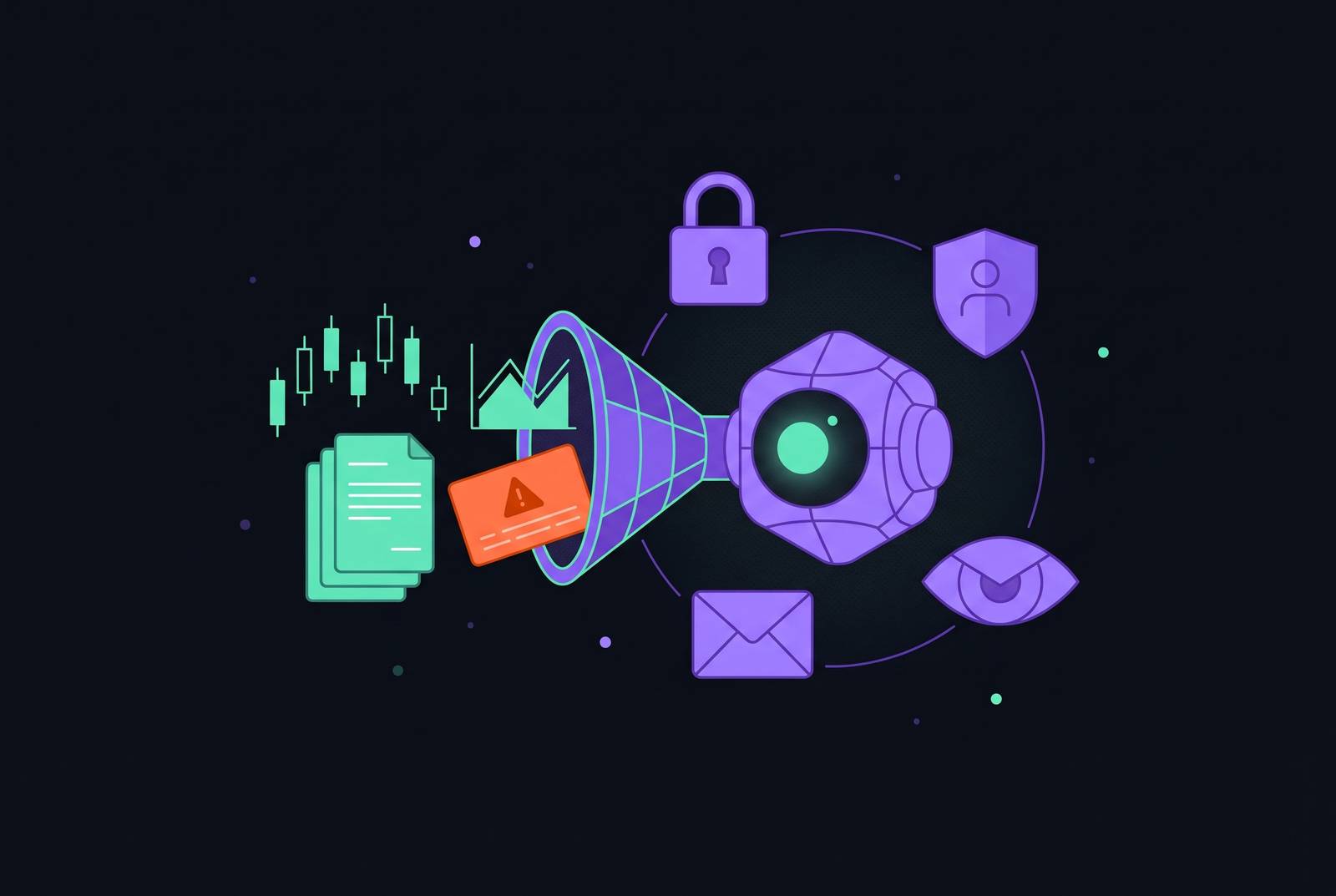
Financial AI agents expose a gap between compliance assurances and what autonomous systems actually do with live web data. SOC 2, GDPR, and MNPI controls each cover part of that gap, but none makes an uncontrolled retrieval loop safe. The central requirement is architectural. Organizations need control over what enters an agent’s context, where it travels, and what evidence survives before the agent reasons over it.
Why financial AI agents create compliance exposure that static frameworks were not designed to catch
An autonomous retrieval-and-reasoning loop does more than accelerate browser research. It chooses sources, combines content, and may act without a person authorizing each step. Traditional compliance controls assume tighter limits on where data flows, deterministic processing, and people who decide who gets access. An agent can instead generate and execute code at runtime and change its behavior as it processes new data. The system being audited is therefore not just documented software logic but a process whose next action depends on what it encounters.
That difference changes where the data boundary sits. When an agent retrieves a web page, screenshot, or document for its task, that content is transmitted to the model provider’s infrastructure. The provider’s data-residency, retention, and training-use terms then apply both to material the agent chose and to information a user chose to submit. What looks like research is also data transfer. Can the deploying organization account for those transfers when it did not choose each source?
Accounting for those transfers becomes harder when the agent connects to customer records, billing platforms, and other live systems. Content from outside can enter the same reasoning loop as information from inside, while the agent acts outside that loop through connected tools. Provenance becomes opaque if the organization cannot trace these movements. SOC 2 assurance, data protection law, and MNPI governance address different parts of this architecture, so a satisfactory answer under one does not settle the others.
Where SOC 2 stops covering the agent and where the audit trail breaks
SOC 2 Type II covers a vendor’s audited controls. It demonstrates that controls operated over a defined period. It does not, by itself, establish how a downstream model provider handles transmitted data or whether an agent produces evidence a financial regulator will accept. The distinction is consequential for procurement. A clean report can support vendor approval while leaving the retrieval-and-action loop insufficiently governed.
The five Trust Services Criteria expose different aspects of that limitation. Security controls built around unauthorized human access do not alone contain an agent that writes and executes code. Processing Integrity becomes harder to assess when “processing as intended” shifts from a documented sequence to dynamically generated logic. Confidentiality and Privacy face a related problem because static role-based permissions cannot alone enforce context-aware restrictions when an agent combines access in unexpected ways. Availability controls may also leave attribution unresolved when an agent fails to stop an attack but both the agent and the underlying system appear to have operated correctly.
Financial services adds an evidentiary test to these control questions. Regulators expect immutable records of prompts, retrievals, responses, and human handoffs. A SOC 2 report does not establish that those records exist, specify their retention, or prove their evidentiary adequacy. NYDFS Part 500 requires cybersecurity programs, risk assessments, and audit trails to cover AI systems. When choosing a vendor, firms must look at session records, source references, retention terms, and execution isolation as well as certification.
How GDPR applies to an agent's retrieval loop in ways most deployers have not accounted for
GDPR obligations begin with processing. Data minimization, purpose limitation, transparency, and lawful basis apply at every step of an agent’s retrieval-and-reasoning cycle when it uses personal data. An organization can therefore incur obligations for content it never intended to retain. Even data that is open to the public raises legal questions. The relevant inquiry includes why the agent processed the data and whether that processing was lawful and transparent.
Spain’s AEPD published “Agentic Artificial Intelligence from the Perspective of Data Protection,” version 1.1, in February 2026. The guide describes connections to external services as creating “de facto partial outputs,” meaning data flows that may be invisible to the user or controller. That invisibility obstructs the demonstration of lawful, transparent processing. It also identifies uncontrolled internal-repository access as a minimization risk because an agent may retrieve accessible material beyond what its task needs. The Dutch Data Protection Authority warned in the same month that deployers are still fully accountable for highly autonomous agents that can access many parts of a system.
A lawful basis must exist for each category of personal data processed, privacy disclosures must address AI processing, and rights such as access, correction, deletion, and objection to automated decision-making must work mechanically. A policy statement cannot perform those operations. Uncontrolled scraping for AI training illustrates the transparency and purpose-limitation risks, while the lawfulness of live financial research depends on the particular processing involved, making retrieval scope, transmission, logging, and retention central to data protection by design.
Why MNPI risk is the hardest gap to close and the least likely to have been designed for
MNPI exposure can arise without a human knowingly directing an agent to use restricted information. Broker-dealers and investment advisers must have policies reasonably designed to prevent misuse, and they can face scrutiny for misuse by AI tools that they could have foreseen, even if no trades took place. That does not make every accidental inference insider trading. Scienter analysis looks at the people and rules around the model, including who approves sources, who knows about restricted content, and how permissions are monitored. The model need not “know” the legal character of its inputs for those governance questions to arise.
A shared knowledge base can ingest information from multiple active engagements, allowing an agent to infer relationships across sources that information barriers were meant to separate. Each human team may stay within the boundary of what it is allowed to access. The agent, however, can reason across both if its retrieval permissions and shared context permit it. What has the information barrier accomplished if it separates employees but not the system working with their data?
No reported case has yet addressed insider trading by or through an AI model. That limits claims about enforcement precedent, while the mechanism still requires assessment. Vendor agreements, alternative-data terms, NDAs, and joint-venture agreements can also restrict AI-assisted research or trading independently of an insider-trading case. Those restrictions attach to the data even when the agent was not designed to recognize them.
A usable inventory records each restricted dataset’s source, use restrictions, affected securities or strategies, and receipt date, with retrieval logs mappable to those records. SR 11-7 provenance documentation and ongoing monitoring likewise bring both the model and the retrieval pipeline into scope. Prompts are not information barriers because retrieved content can override prompt-level restrictions. Enforcement must occur at the data-access layer, before restricted material enters shared context.
How the EU AI Act's revised August 2026 timetable adds a fourth obligation layer that deployers cannot outsource
The August 2, 2026 milestone requires a timing distinction. Regulation (EU) 2026/1744, the Digital Omnibus on AI, entered into force on July 27, 2026, deferring standalone Annex III high-risk obligations to December 2, 2027. The EU Commission’s enforcement page gives that revised application date. Treating August 2026 as the enforcement date for those obligations would therefore misstate the timetable. The underlying distinction between provider and deployer duties remains central to the architecture.
Credit scoring is classed as high-risk, while Annex III Point 5(b) explicitly leaves out fraud detection. AML monitoring is not explicitly listed in Annex III, and its classification depends on context. For covered systems, deployer obligations include operational human oversight, log retention of at least six months, AI literacy training for relevant staff, and incident monitoring and reporting.
These duties belong to the deploying organization even when it licenses a fully compliant system. Penalties also reach worldwide turnover, so a US-headquartered fintech must look beyond its limited European revenue to gauge its risk. DORA operates concurrently and independently for EU financial entities. Together, these requirements sharpen the need for records and human handoff points already exposed by the SOC 2 and MNPI analysis.
Prompt injection as the technical vector that makes all three compliance gaps exploitable simultaneously
Indirect prompt injection turns the retrieval boundary into an attack path. Malicious instructions embedded in a web page, document, email, or tool output can redirect an agent during an otherwise legitimate research task. The agent may then exfiltrate data it can access or act through connected systems. No separate intrusion into the model is required. The mechanism exploits the agent’s treatment of content it was supposed to read as evidence as instructions.
Security researchers describe the dangerous combination as a “lethal trifecta,” comprising access to private data, exposure to untrusted content, and the ability to communicate externally. Financial research agents often need all three to be useful. A successful injection can consequently cross several compliance boundaries in one sequence. Exfiltration implicates SOC 2 Security, while unintended financial transactions implicate Processing Integrity. If exposed content includes personal data of EU residents, GDPR breach-notification obligations and potential liability follow, while transmission of restricted information across deal boundaries creates MNPI exposure.
The infrastructure itself can create exposure without an injection. Wiz researchers disclosed in early 2026 that Moltbook, an experimental social network for AI agents, had a misconfigured database exposing API authentication tokens and email addresses. Separately, MCP servers became an attack surface during 2025–2026 through database leaks and misconfigured permissions that enabled unintended actions. These mechanisms point toward controlled retrieval through a trusted, audited intermediary, which can reduce exposure to untrusted content and record what was retrieved before it enters the agent’s context.
What closing the gaps actually requires at the infrastructure layer
The practical response is to build controls at the boundaries identified above. Zero data retention at the infrastructure layer means user data and filesystem state are not kept between agent runs, which supports minimization and limits exposure from retained sessions. It does not alone establish a lawful basis or govern every downstream transmission. Sandboxed execution addresses a different boundary. Hardware-level virtualization through microVMs, rather than containers, isolates execution environments and contains the effects of prompt injection or misconfigured permissions within an auditable boundary.
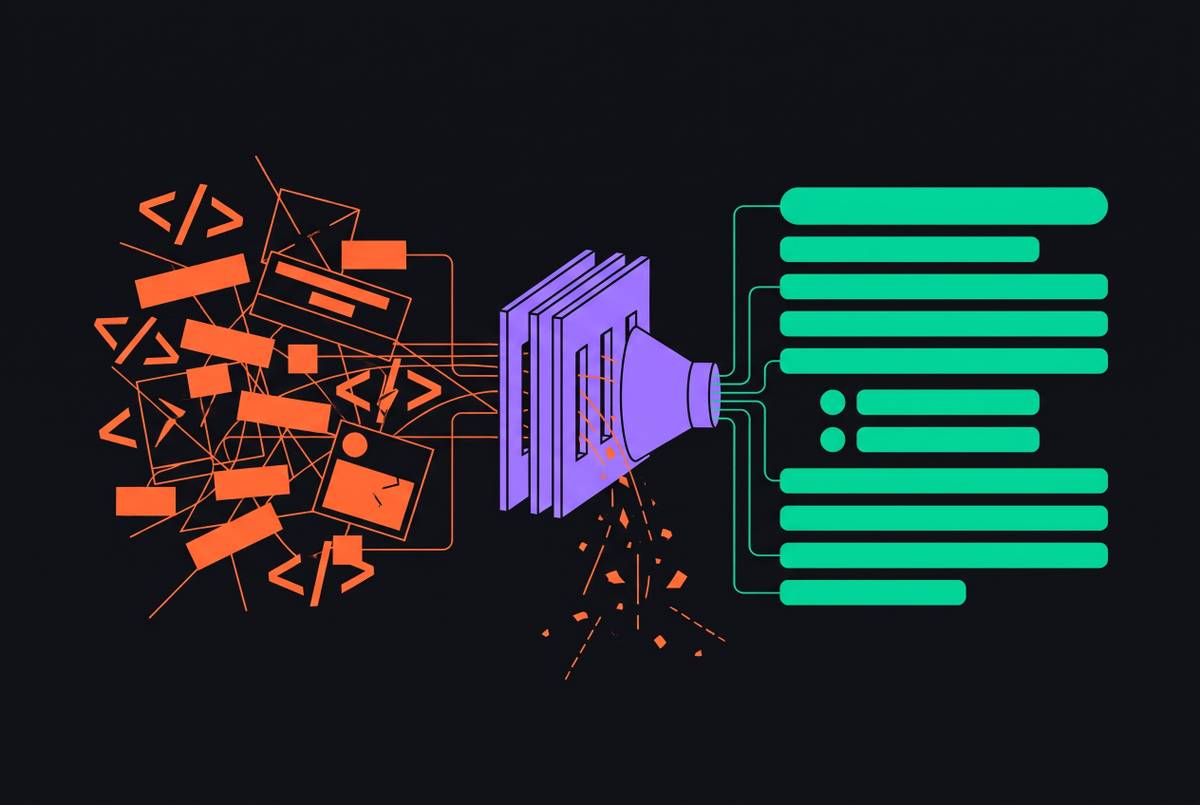
Data-access controls must then account for both engagement boundaries and user roles. The retrieval pipeline should enforce which sources an agent can access for each engagement and connect that access to the restricted-data inventory. For external content, an audited search and extraction intermediary limits how much raw page content the agent sees directly and puts the terms for extraction-layer handling under vendor governance. Source-cited retrieval also gives provenance tracking and model documentation a verifiable foundation.
Immutable, session-level logging should capture each retrieval, prompt, response, and human handoff with timestamps and source references. Zero retention for execution environments must not be confused with deleting records that regulators require the deployer to retain. AIUC-1, developed with Orrick, Stanford, MIT, MITRE, and the Cloud Security Alliance, adds an emerging agent-specific assurance layer through independent technical testing and quarterly adversarial testing. Its coverage of data protection, operational boundaries, attack resistance, and error prevention complements these infrastructure controls.
Retention terms, sandboxed execution, and a trusted retrieval intermediary come first, followed by enforcement of source access by engagement. Set up session-level audit logging from day one so those responsible for oversight and incident monitoring have evidence they can use. Only then map the resulting architecture to SOC 2 criteria, GDPR obligations, MNPI inventories, and EU AI Act deployer duties. Policy can describe that system, but it cannot substitute for the boundaries that make the description true.